01 of 06
StoryBuddy
AI picture books for young storytellers
2026Solo developer, 3-person research team
Primary visual evidence
Brief
Problem
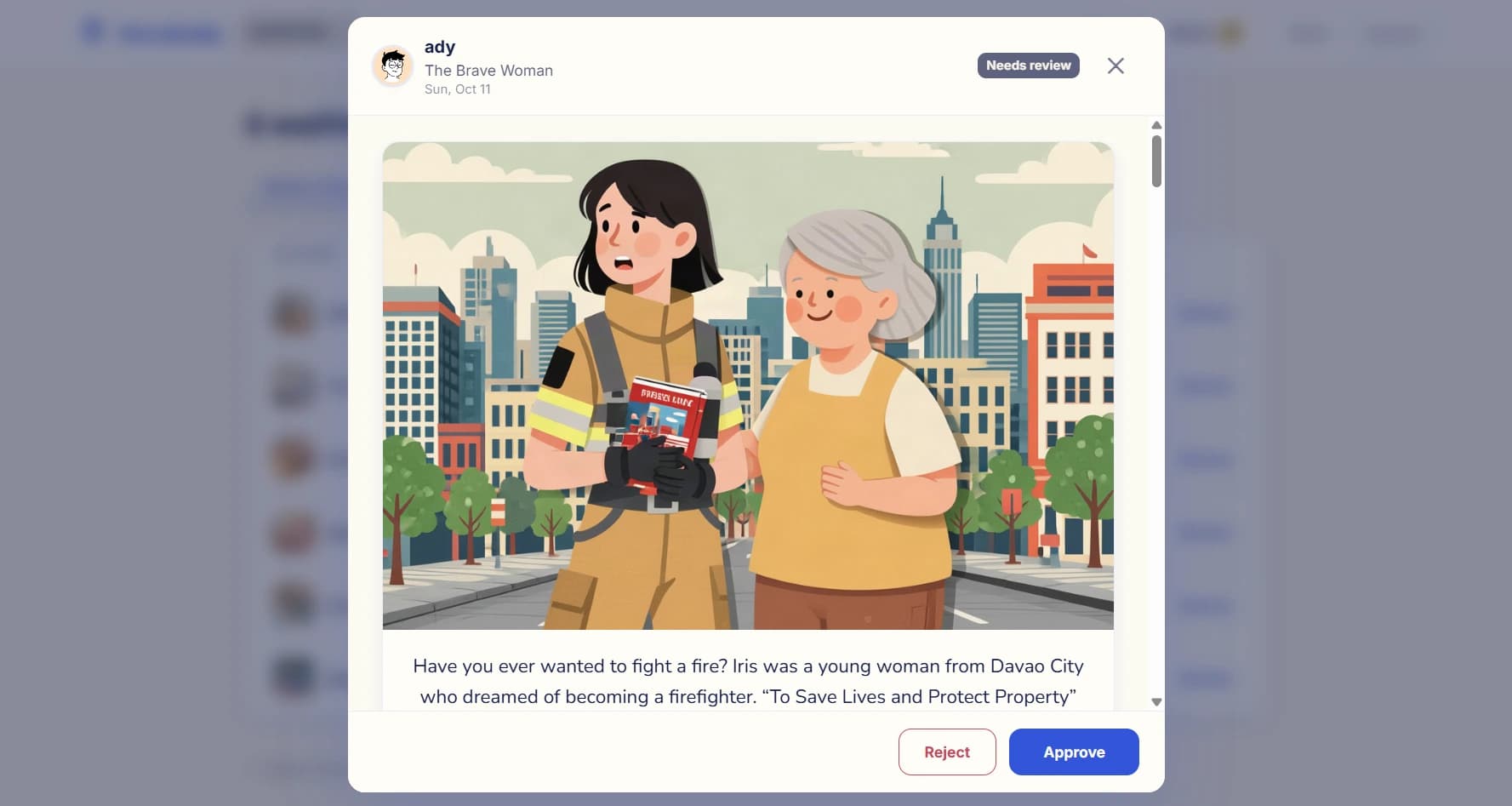
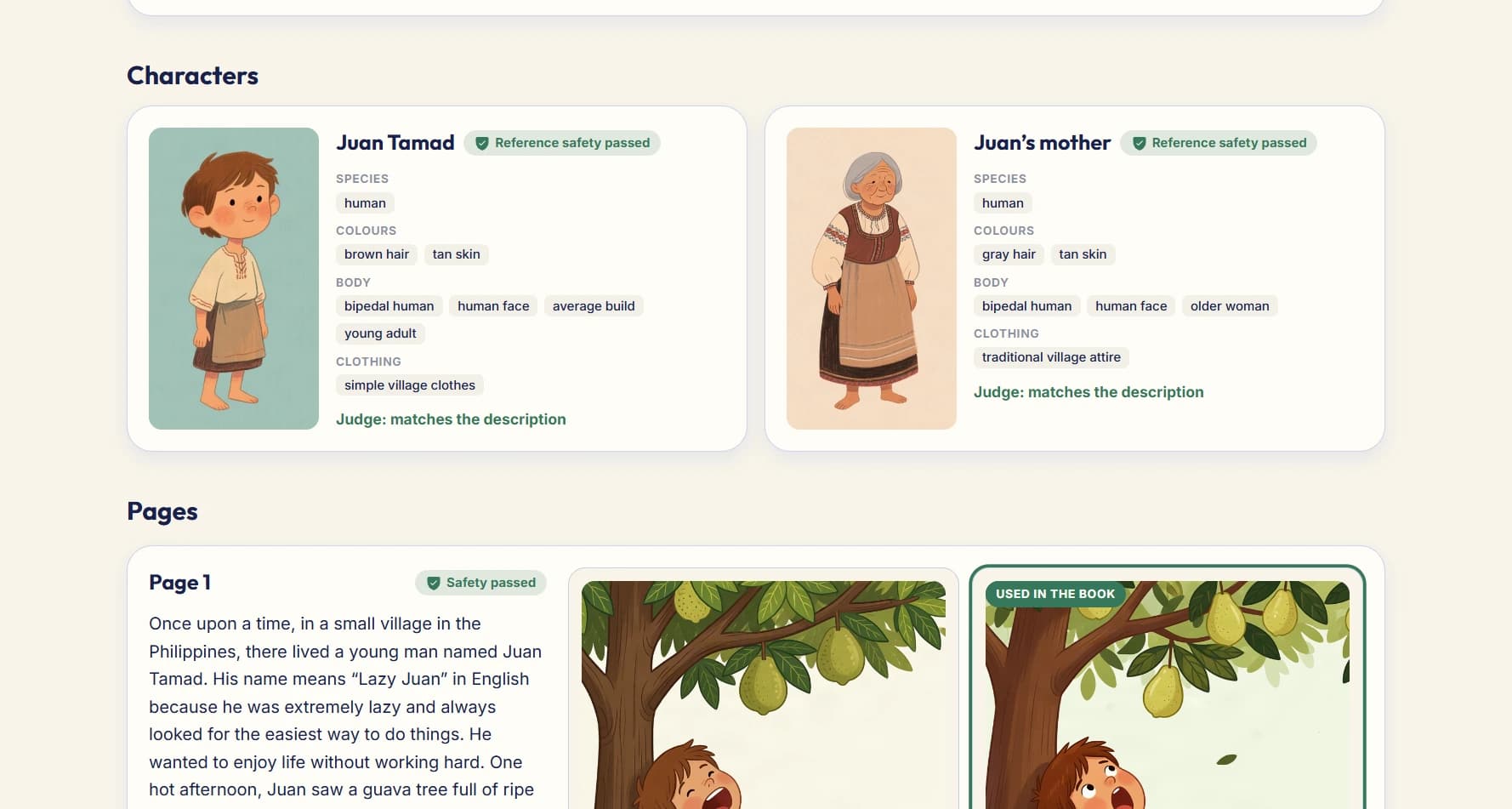
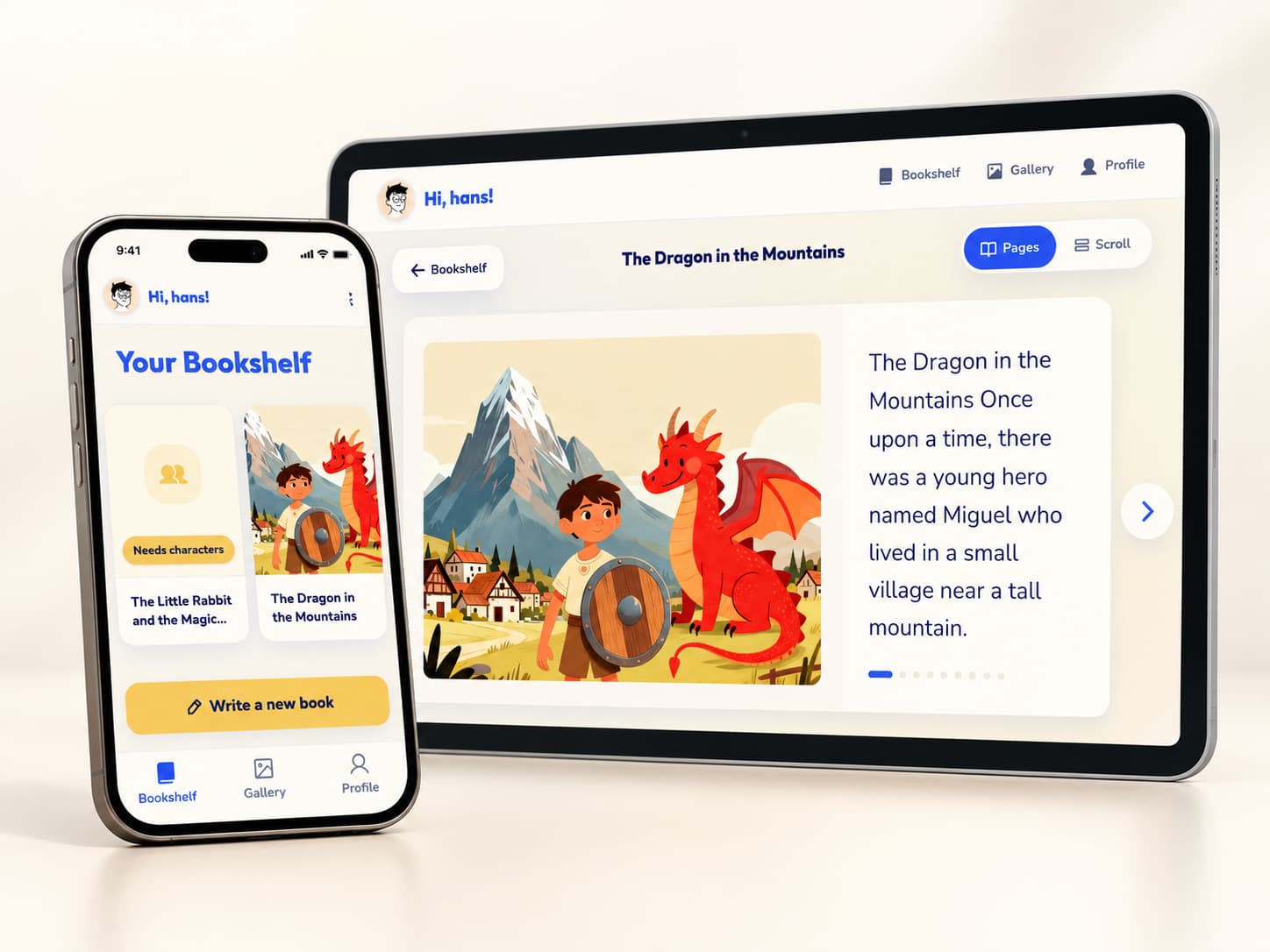
Turning Grade 5–6 learners' stories into illustrated picture books requires characters to stay recognizable across scenes while checking generated content for child safety and personal information.
Response
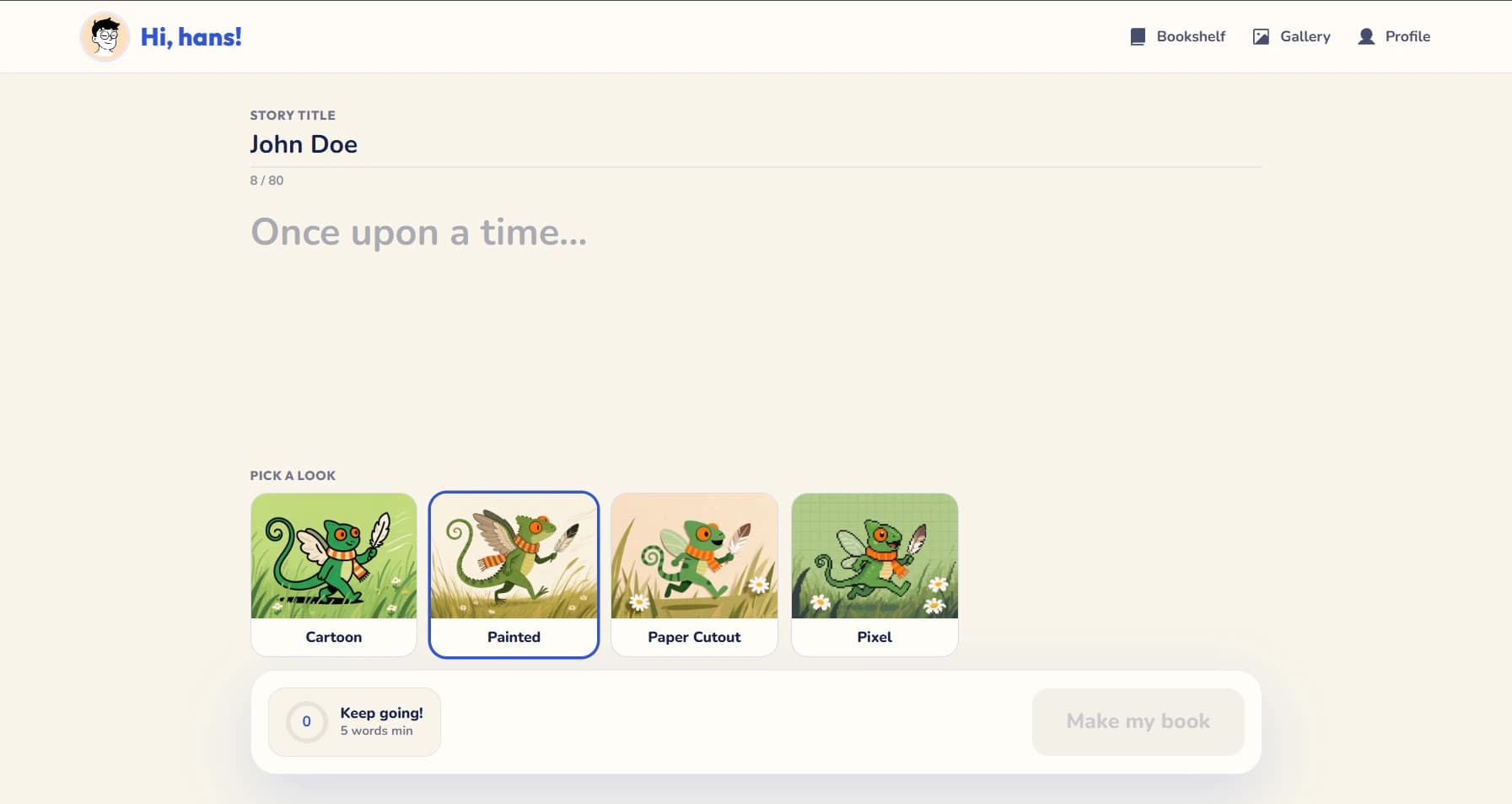
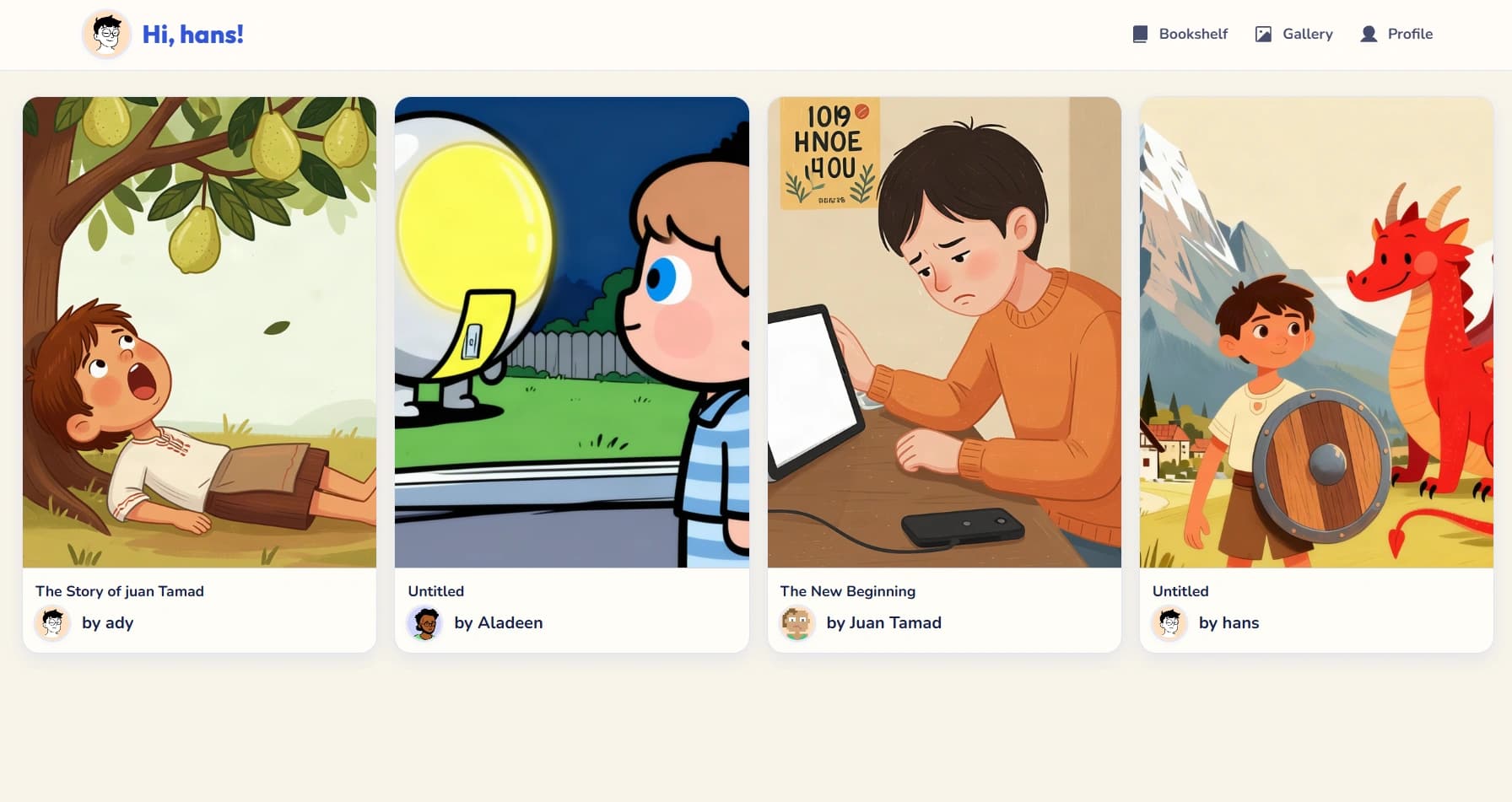
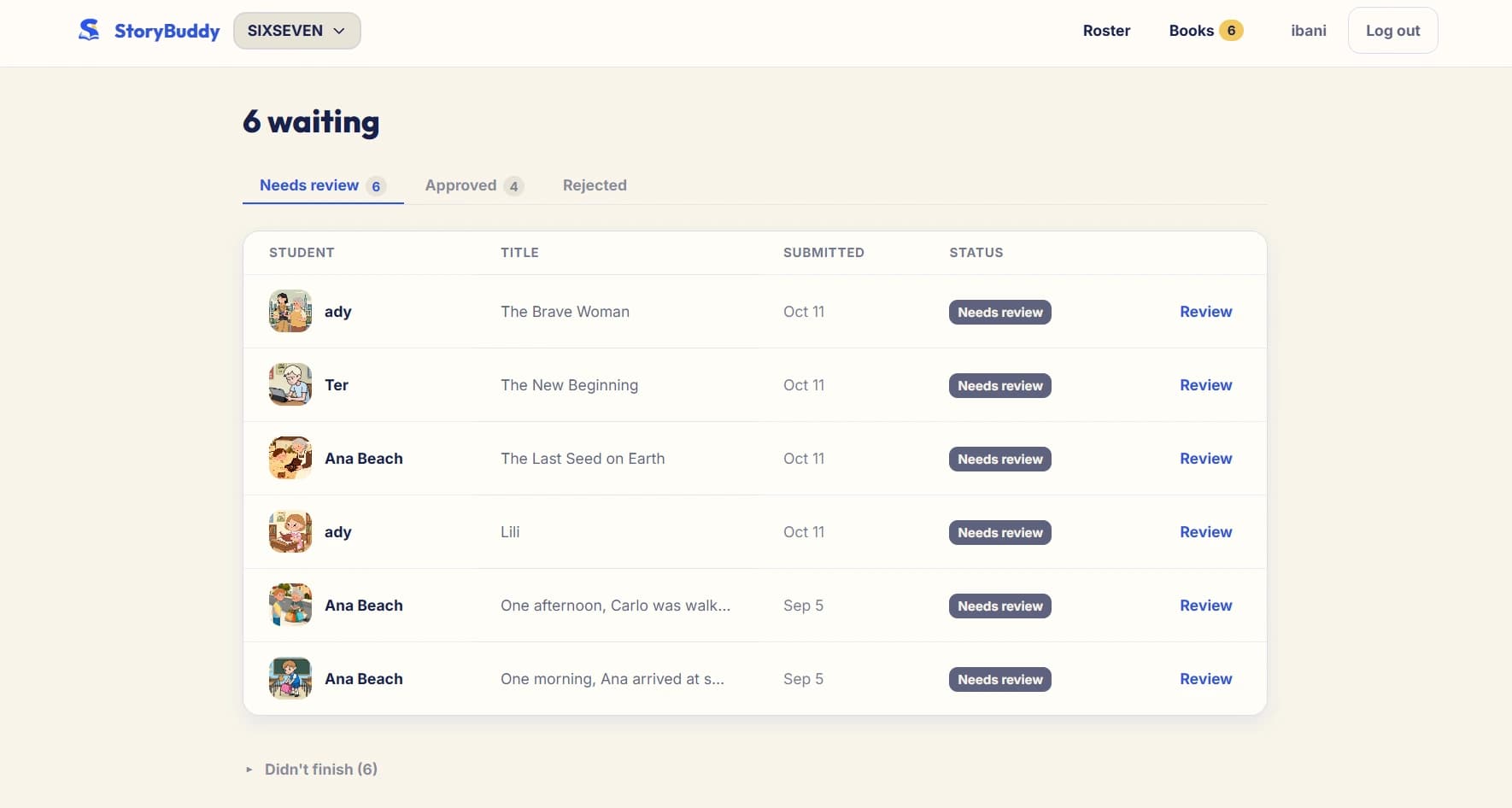
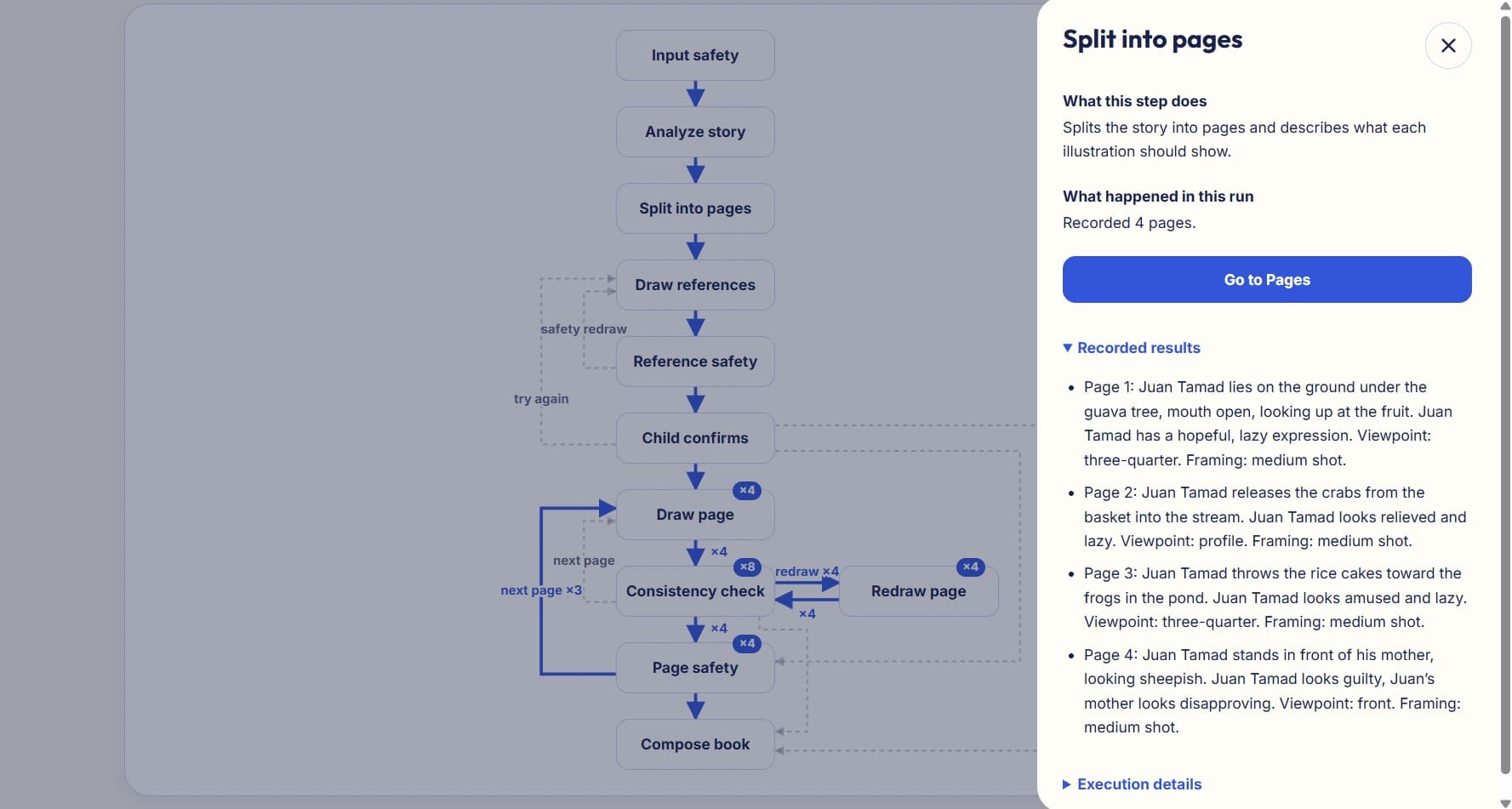
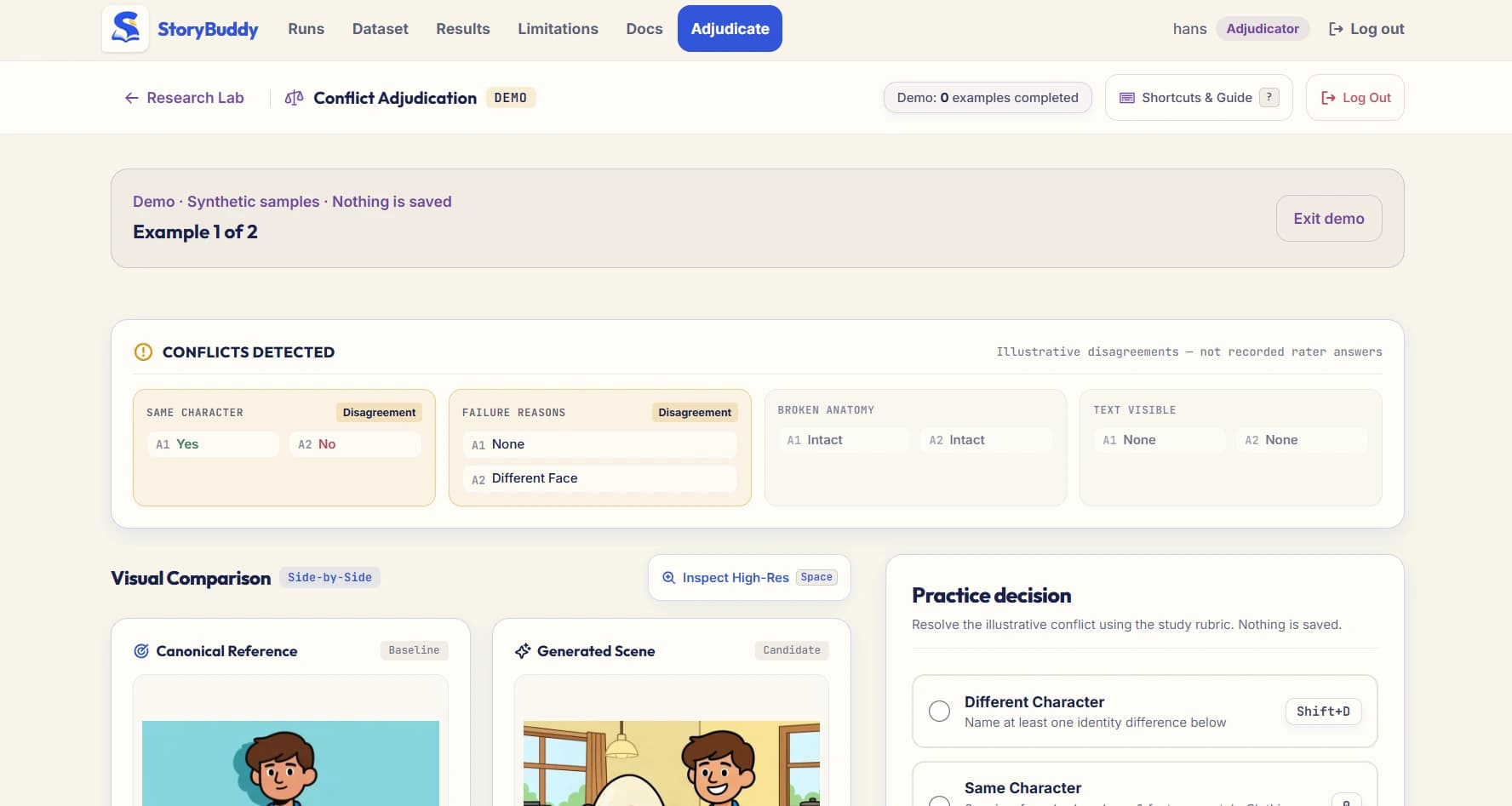
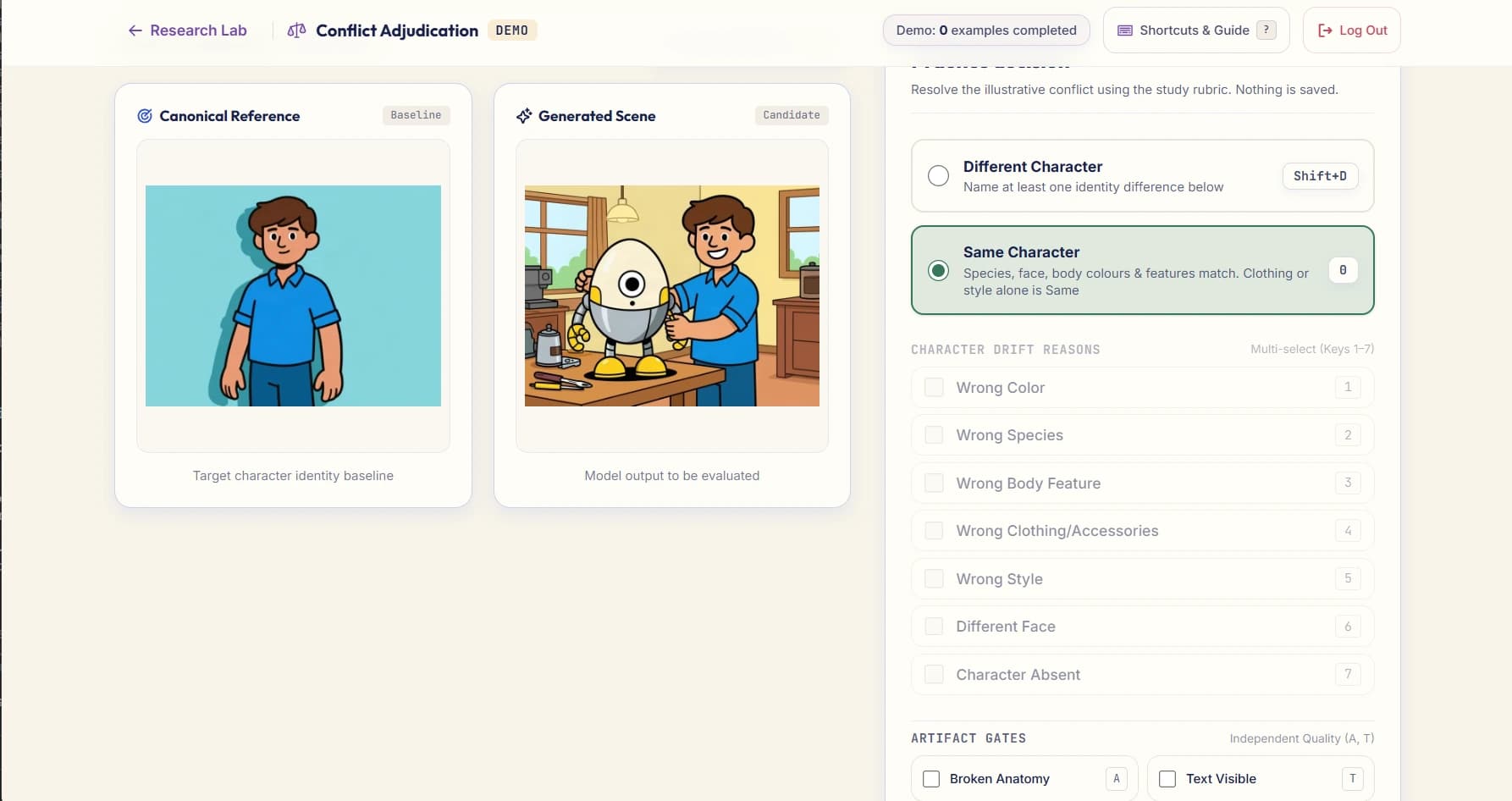
StoryBuddy is a capstone project developed at Holy Cross of Davao College for Grade 5–6 learners, with stories collected at Matina Aplaya Elementary School. As the solo developer working with three researchers, I built an 11-node deterministic LangGraph pipeline that turns stories into picture books using open-weight models. The workflow connects story analysis, reference generation, VLM-based consistency checks, and targeted scene regeneration. I also built annotation and evaluation tooling for character-identity review with precision, recall, and F1 reporting. The project supports SDG 4: Quality Education.
Technical Decisions
- 01
An 11-node deterministic LangGraph pipeline connects story analysis, reference generation, consistency checks, and scene regeneration.
- 02
Open-weight models handle text and image generation: Mistral Small 3.2 and Gemma-3-27B, with Qwen-Image and Qwen-Image-Edit on fal.ai.
- 03
Llama Guard 4 12B and gpt-oss-safeguard check content safety, while Presidio handles personal-information redaction.
- 04
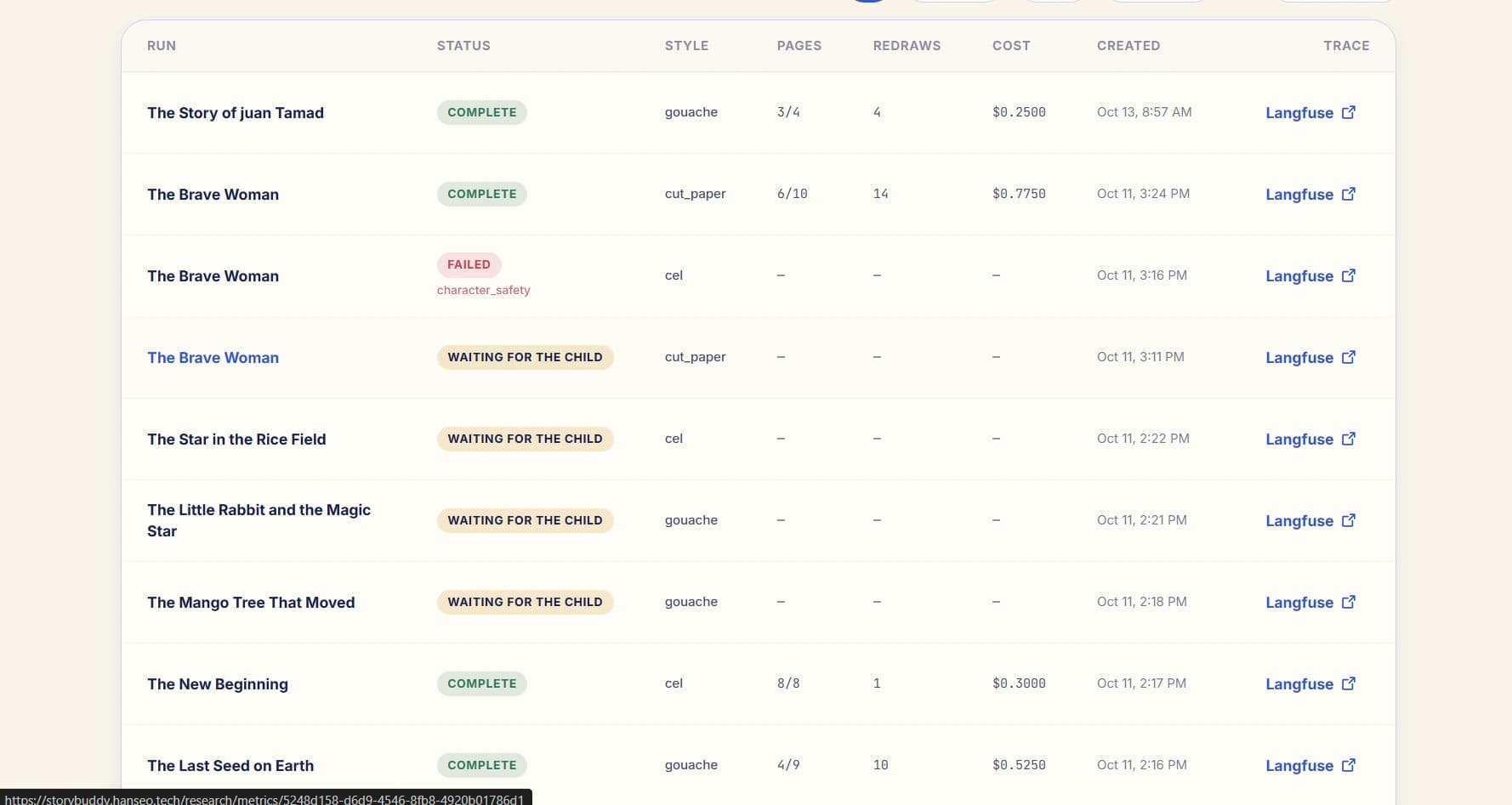
VLM-based character consistency checks and targeted scene regeneration address character drift; annotation tooling records human labels and reports precision, recall, and F1.
System
Stack
- 01LangGraph
- 02Qwen-Image
- 03Qwen-Image-Edit
- 04Mistral Small 3.2
- 05Gemma-3-27B
- 06Llama Guard 4 12B
- 07gpt-oss-safeguard
- 08Presidio
Integrations
- 01fal.ai
Capabilities
- 01AI picture-book generation from Grade 5–6 learners' stories
- 02Story analysis and character-reference generation
- 03VLM-based character consistency checks across scenes
- 04Targeted regeneration of scenes with character drift
- 05Content safety checks and personal-information redaction
- 06Character-identity annotation and evaluation with precision, recall, and F1 reporting
Screenshots